

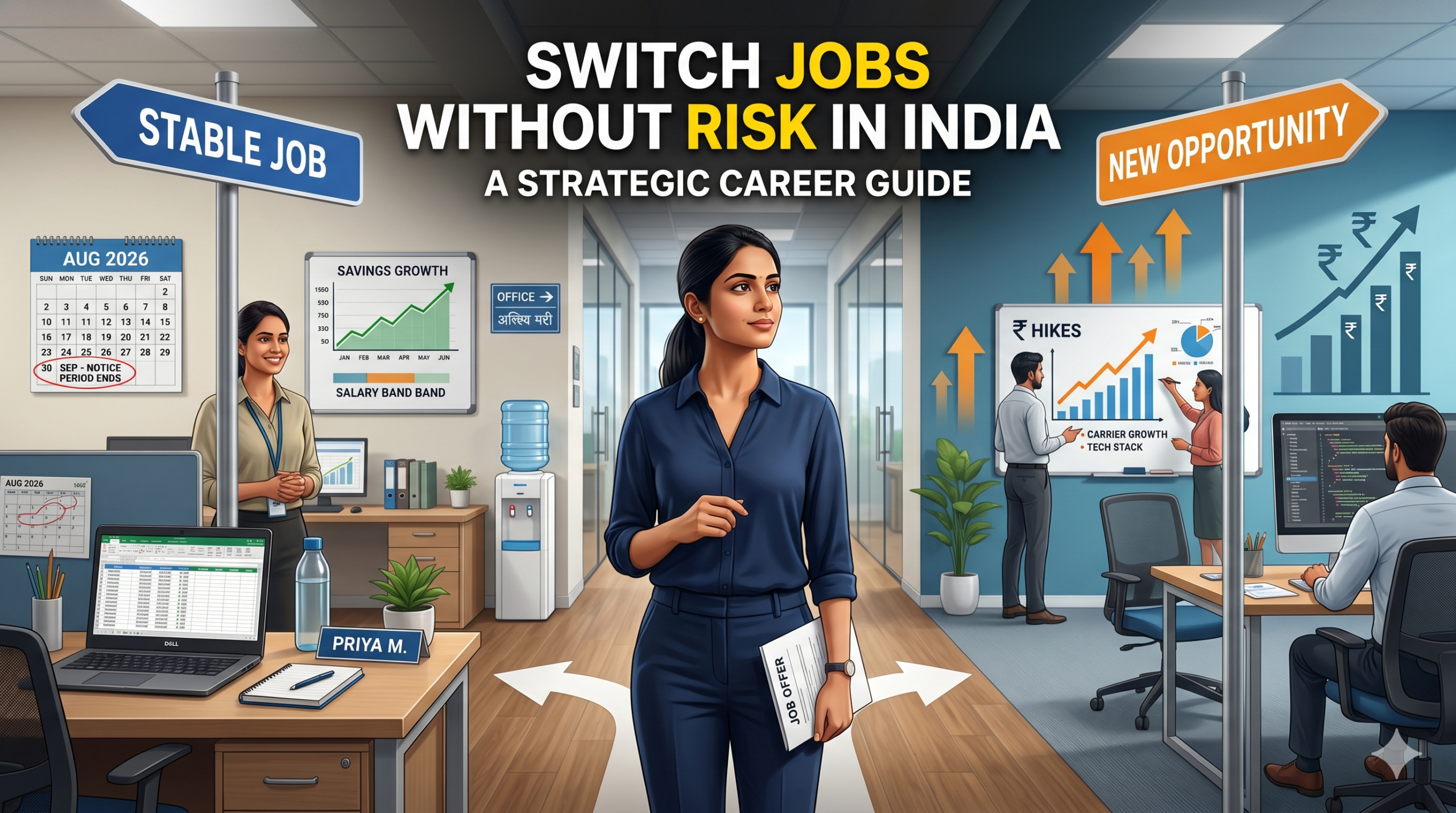
Thinking of switching jobs but scared of losing income?
That fear is valid. One wrong move can leave you jobless for months. EMI, rent, family — everything depends on your salary.
But here’s the truth:
You can switch jobs in India without major risk — if you plan it right.
This guide shows exactly how to do that, step by step.
Quick Answer
How to switch jobs in India without risk:
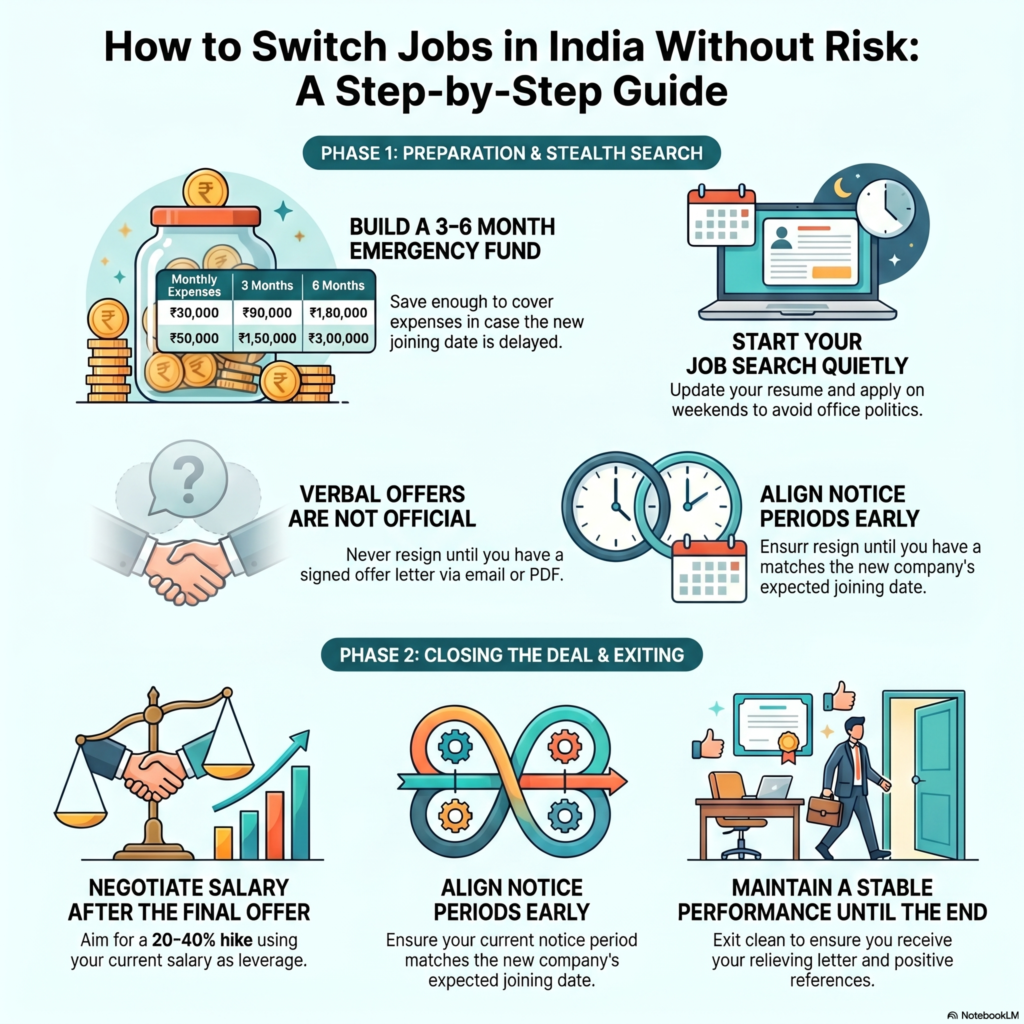
- Build 3–6 months emergency fund before quitting
- Never resign before getting a written offer
- Keep your current job performance stable
- Negotiate salary after final offer, not before
- Plan overlap of notice period and new joining
Switching jobs is not risky.
Switching blindly is risky.
Most people quit emotionally. Then panic financially.
In India, hiring cycles are slow. Background checks take time. Offers get delayed.
So your goal is simple:
Move only when your income continuity is protected.
Step-by-Step Guide to Switch Jobs Without Risk
Step 1: Fix Your Financial Base First
What it means:
You need a safety cushion.
Why it matters:
If your new job delays, you won’t panic.
Example:
Monthly expenses: ₹30,000
Emergency fund needed: ₹90,000–₹1,80,000
Action:
- Save at least 3 months expenses
- Keep money in savings account or liquid fund
No fund = high stress = bad decisions.
Step 2: Start Job Search Quietly
What it means:
Do not announce your plans.
Why it matters:
Office politics can backfire.
Example:
Manager finds out → stops giving opportunities → poor appraisal.
Action:
- Update resume
- Apply on weekends or after work
- Use platforms like LinkedIn, Naukri
Stay low-key.
Step 3: Never Quit Without Offer Letter
This is where most people mess up.
What it means:
Verbal offer = useless
HR promise = useless
Only written offer matters.
Example:
Company says “you’re selected” → later freezes hiring → you’re stuck.
Action:
- Wait for official offer email/PDF
- Check salary, role, location, joining date
No offer letter = no resignation.
Step 4: Time Your Notice Period Smartly
What it means:
Your notice period should match new job joining.
Why it matters:
Gap = no salary
Overlap confusion = stress
Example:
- Current notice: 60 days
- New company wants 30 days
Problem.
Action:
- Inform new company about your notice period upfront
- Try buyout or negotiation if needed
Step 5: Keep Performance Stable in Current Job
What it means:
Don’t mentally quit early.
Why it matters:
You still need experience letter, relieving letter, references.
Example:
Poor exit behavior → bad feedback → future issues.
Action:
- Do your work properly till last day
- Avoid conflicts
- Exit clean
Step 6: Negotiate Salary the Right Way
What it means:
Don’t rush negotiation.
Why it matters:
Early negotiation reduces your leverage.
Example:
If you accept first offer → you lose ₹2–5 lakh annually.
Action:
- Wait for final offer
- Ask for 20–30% hike (depending on market)
- Use your current salary as base
Step 7: Plan Transition Week Properly
What it means:
Handle last week carefully.
Why it matters:
Loose ends can create problems later.
Example:
Incomplete handover → HR delays relieving.
Action:
- Complete handover
- Collect documents
- Clear dues
Real-Life Example (Indian Scenario)
Rahul works in Chennai.
- Salary: ₹35,000/month
- Expenses: ₹25,000
- Savings: ₹20,000
He wants to switch jobs.
What he did right:
- Built ₹1 lakh emergency fund
- Applied for 2 months while working
- Got offer: ₹50,000/month
- Waited for written offer
- Resigned after confirmation
Result:
- No income gap
- 40% salary jump
- Zero financial stress
Common Mistakes People Make
- Quitting job without offer
- Ignoring emergency fund
- Accepting first salary offer
- Burning bridges during exit
- Sharing plans with colleagues early
These are not small mistakes. They cost money.
Pro Tips
- Apply to at least 20–30 jobs, not 5
- Keep one backup offer if possible
- Track expenses before switching
- Avoid switching during layoffs period
- Keep health insurance active
Tools & Platforms
If you’re planning a switch, use:
- LinkedIn for high-paying opportunities
- Naukri for volume applications
- Zerodha Coin or Groww for emergency fund parking (liquid funds)
- Salary comparison tools like Glassdoor
Also consider upgrading skills using platforms like Coursera or Udemy.
Better skills = better salary jump.
FAQ Section
1. Is it safe to switch jobs without another offer?
No. It’s financially risky. Always secure a written offer first.
2. How much salary hike should I expect in India?
Typically 20–40%, depending on your experience and skills.
3. What if my new company delays joining?
Use your emergency fund. Or negotiate extension with current employer.
4. Should I tell my boss before getting an offer?
No. Tell only after you have a confirmed offer.
5. How long should I stay in one job before switching?
At least 1–2 years. Frequent switches reduce credibility.
6. Can I switch jobs during recession or layoffs?
Yes, but risk is higher. Be extra cautious with offer stability.
Conclusion
Switching jobs in India is not risky.
Doing it without planning is.
If you follow three things, you’re safe:
- Emergency fund
- Written offer
- Clean exit
That’s it.
No drama. No panic. Just a controlled upgrade in income.