

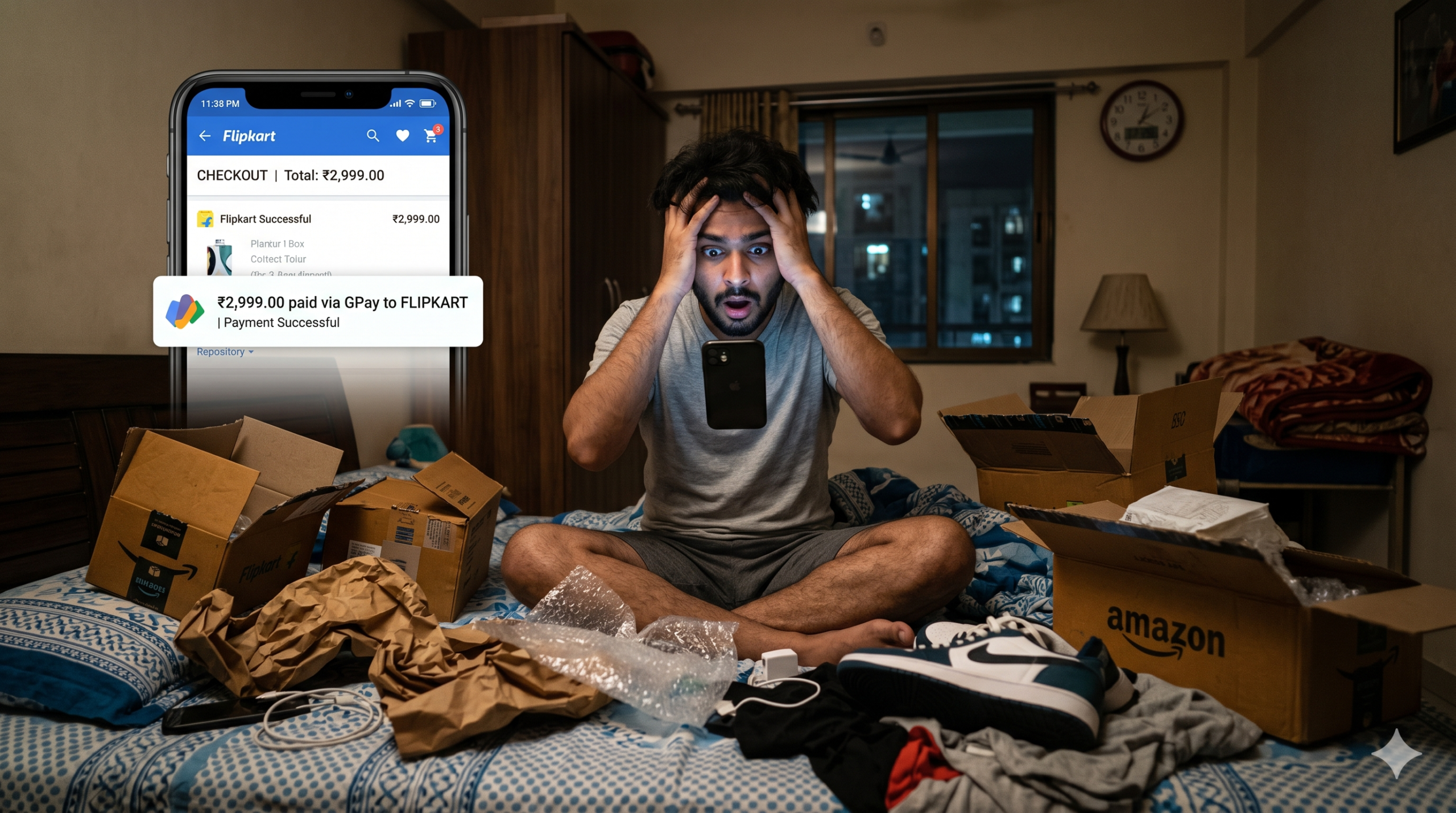
You open a shopping app “just to browse.”
Ten minutes later, ₹1,499 is gone.
Sound familiar?
Impulse spending in India is easy now. UPI, one-click checkout, endless offers. You don’t even feel the money leaving.
This guide shows you how to stop impulse spending using simple psychology hacks. Not theory. Real actions you can start today.
Quick Answer
How to stop impulse spending in India:
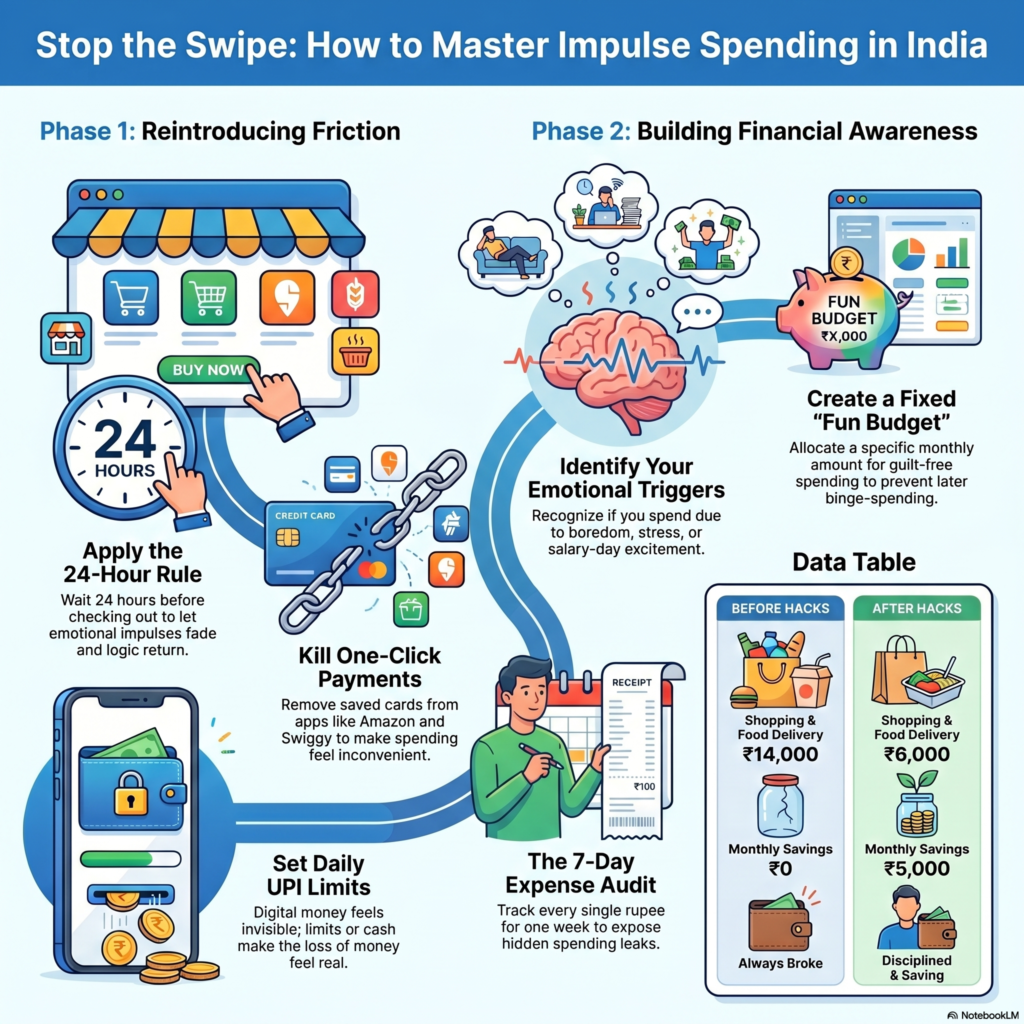
- Follow the 24-hour rule before buying anything non-essential
- Remove saved cards from apps and disable one-click payments
- Use cash or UPI limits for daily spending
- Track every expense for 7 days (no excuses)
- Avoid triggers like sale notifications and “limited-time” deals
Impulse spending is emotional, not logical.
You don’t buy because you need.
You buy because you feel something.
Bored. Stressed. Reward-seeking.
Apps are designed to exploit this. Flash sales. Countdown timers. “Only 2 left.”
If you don’t control the trigger, you will keep overspending.
Step-by-Step: How to Stop Impulse Spending in India
Step 1: Use the 24-Hour Rule
What it is:
Wait 24 hours before buying anything non-essential.
Why it works:
Impulse fades. Logic comes back.
Example:
You see shoes for ₹2,999 on a sale. Wait a day.
Next day, you don’t care anymore.
Action:
Add items to cart. Do not checkout immediately.
Step 2: Remove Easy Payment Access
What it is:
Delete saved cards and disable auto-pay.
Why it works:
Friction kills impulsive behavior.
Example:
Typing card details feels annoying. You rethink the purchase.
Action:
Remove saved cards from Amazon, Flipkart, Swiggy.
Step 3: Set a Monthly “Fun Budget”
What it is:
A fixed amount for guilt-free spending.
Why it works:
Restriction without allowance leads to binge spending.
Example:
₹3,000/month for shopping, food, random buys.
Action:
Transfer this amount to a separate account or wallet.
Step 4: Track Every Rupee (Short-Term)
What it is:
Write down every expense for 7 days.
Why it works:
Awareness reduces waste instantly.
Example:
You realize ₹1,200 went to food delivery in a week.
Action:
Use apps like Walnut or a simple notes app.
Step 5: Identify Your Triggers
What it is:
Know when and why you spend.
Why it works:
You can’t fix what you don’t see.
Example triggers:
- Late-night scrolling
- Salary day
- Stress after work
Action:
Note the situation every time you spend unnecessarily.
Step 6: Uninstall or Mute Temptation Apps
What it is:
Reduce exposure to shopping triggers.
Why it works:
Less exposure = fewer impulses.
Example:
No notifications → no urgency → no buying.
Action:
Turn off notifications or uninstall 1–2 apps for a week.
Step 7: Switch to Cash or UPI Limits
What it is:
Limit your daily spending method.
Why it works:
Digital money feels “invisible.”
Example:
₹500 cash/day feels real. You spend carefully.
Action:
Set UPI daily limits or withdraw fixed cash.
Real-Life Example (India)
Ravi earns ₹30,000/month in Chennai.
Before fixing impulse spending:
- Rent: ₹10,000
- Food: ₹6,000
- Shopping & Swiggy: ₹8,000
- Savings: ₹0
He feels broke every month.
After applying these steps:
- Shopping budget: ₹3,000
- Food delivery reduced: ₹3,000
- Savings: ₹5,000
No income change. Just behavior change.
Common Mistakes
- Thinking “small amounts don’t matter”
- Keeping all payment methods active
- Falling for “limited-time offers”
- Not tracking spending at all
- Trying to stop everything at once
Pro Tips
- Use separate bank accounts for expenses and savings
- Automate SIP investments right after salary
- Keep your main account balance low
- Avoid browsing apps when bored
- Question every purchase: “Do I need this next week?”
If you’re serious about fixing spending, use tools that force discipline:
- Expense trackers like Walnut or Money Manager
- SIP platforms like Groww or Zerodha Coin
- High-interest savings accounts for emergency funds
Start small. Automate savings first. Then control spending.
FAQ Section
1. Why do I spend money impulsively?
Because of emotions, not needs. Apps are designed to trigger quick decisions.
2. Is impulse spending a bad habit?
Yes, if it affects savings and financial goals.
3. How much should I save monthly in India?
At least 20% of your income. Start with 10% if needed.
4. Can budgeting stop impulse spending?
Only if you actually follow it. Awareness matters more than plans.
5. Are credit cards the main problem?
No. Lack of control is the problem. Cards just make it easier.
6. How long does it take to fix this habit?
7–30 days if you follow strict rules.
Conclusion
Impulse spending is not about money. It’s about behavior.
You don’t need a higher salary.
You need better control systems.
Start with one step today.
Track your spending for 7 days.
That alone will expose the problem.
Then fix it.