

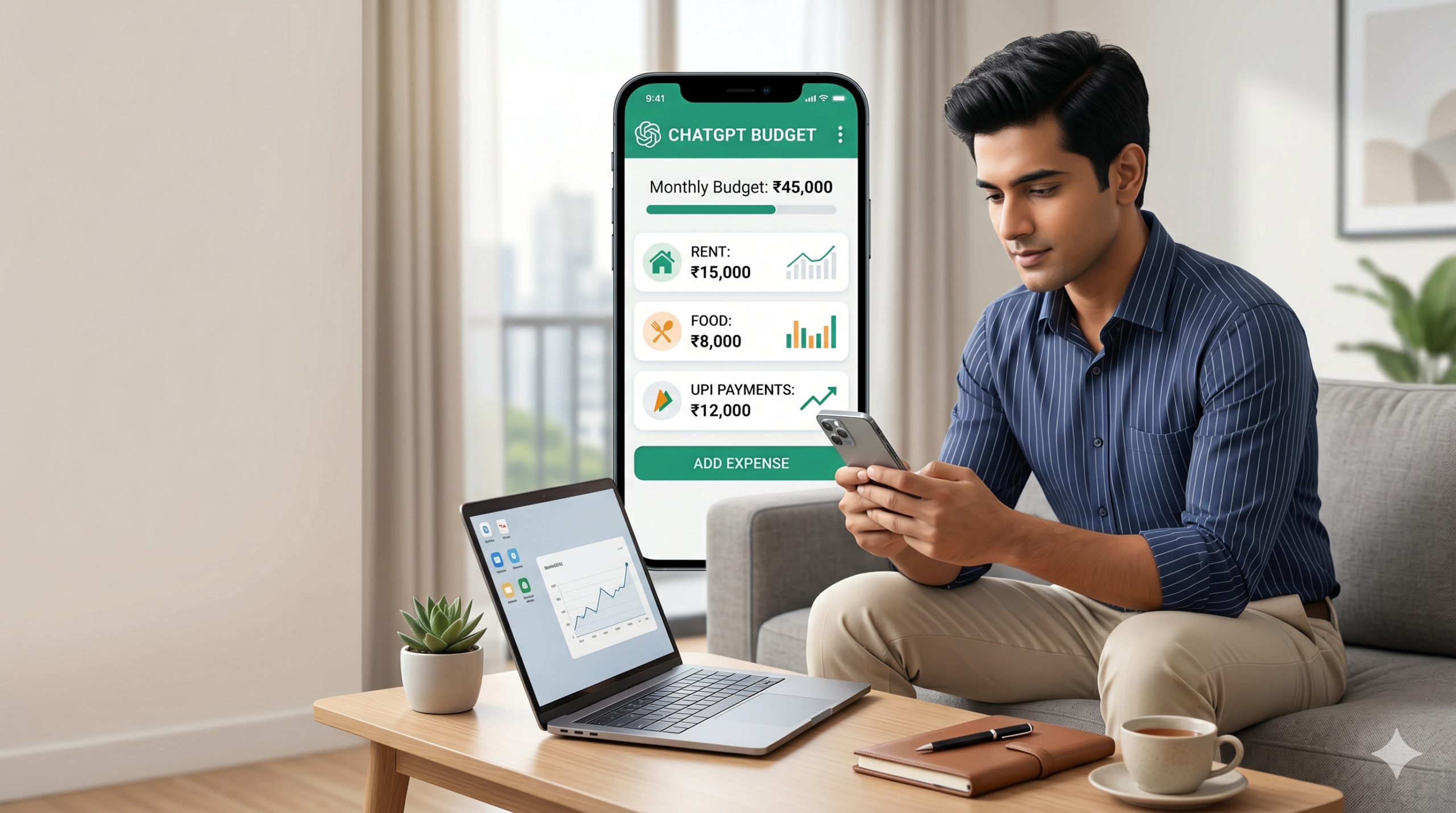
Most people in India don’t track money properly.
Salary comes, UPI goes, and by the 20th… balance is low.
Apps feel complicated. Excel feels boring.
So you avoid it.
Here’s the truth: you don’t need fancy tools.
You can use ChatGPT to manage your budget daily.
This guide shows exactly how to use ChatGPT for budgeting and expense tracking in India.
Simple. Practical. No theory.
Quick Answer
How to use ChatGPT for budgeting and expense tracking (India):
- Ask ChatGPT to create a monthly budget based on your salary
- Paste daily expenses and let it categorize automatically
- Track spending vs budget weekly
- Use it to find cost-cutting ideas based on your habits
- Get reminders and savings plans (SIP, emergency fund)
Budgeting is simple in theory.
Income minus expenses should leave savings.
But in India, money leaks through small spends:
- UPI payments
- Food delivery
- Subscriptions
- Weekend outings
ChatGPT acts like a personal finance assistant.
You just feed data. It organizes, analyzes, and suggests.
No app learning curve. No setup.
How to Use ChatGPT for Budgeting and Expense Tracking (Step-by-Step)
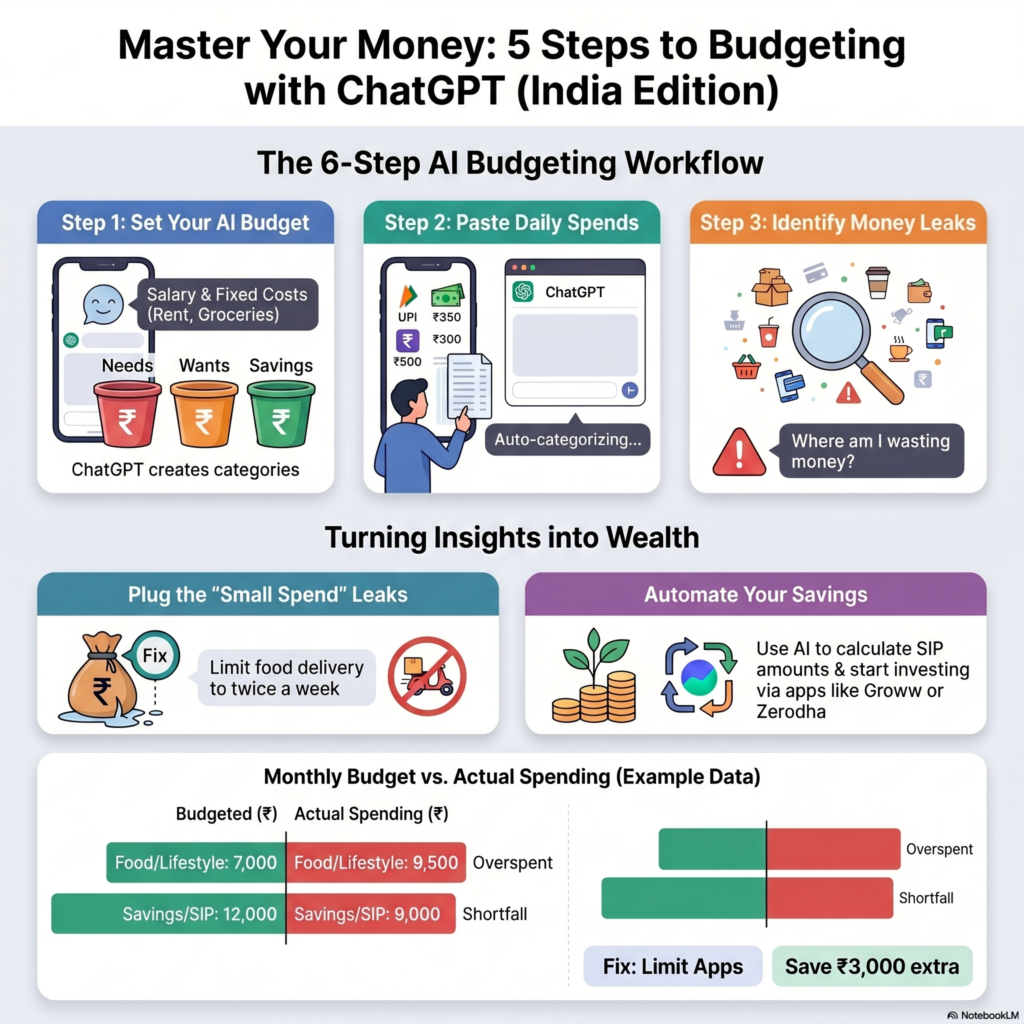
Step 1: Create Your Monthly Budget
What to do:
Tell ChatGPT your salary and fixed expenses.
Example prompt:
“Create a budget for ₹40,000 salary in India. Rent ₹10,000, groceries ₹6,000.”
What happens:
It splits your money into categories like:
- Needs
- Wants
- Savings
Action:
Copy the budget and save it in Notes or WhatsApp.
Step 2: Track Daily Expenses
What to do:
At night, paste your expenses.
Example:
“Spent ₹120 breakfast, ₹250 petrol, ₹300 Swiggy.”
What happens:
ChatGPT categorizes:
- Food
- Transport
- Lifestyle
Action:
Do this daily for 7 days. No skipping.
Step 3: Weekly Expense Summary
What to do:
Ask for a weekly report.
Example prompt:
“Summarize my expenses and compare with my budget.”
What happens:
You’ll see:
- Where you overspent
- Where you stayed disciplined
Action:
Focus only on 1–2 problem areas.
Step 4: Identify Money Leaks
What to do:
Ask directly:
“Where am I wasting money?”
What happens:
ChatGPT points out patterns like:
- Too much food delivery
- Frequent small UPI spends
Action:
Cut the biggest leak first. Not everything.
Step 5: Create a Savings Plan
What to do:
Ask for a realistic plan.
Example:
“Help me save ₹5,000/month from ₹40,000 salary.”
What happens:
You get:
- Expense cuts
- SIP suggestions
- Emergency fund plan
Action:
Start one SIP immediately using apps like Groww or Zerodha Coin.
Step 6: Automate Your System
What to do:
Reuse the same chat thread daily.
Why:
ChatGPT remembers your pattern within the session.
Action:
Make this a 5-minute nightly habit.
Real-Life Example (Indian Scenario)
Salary: ₹40,000
Budget created using ChatGPT:
- Rent: ₹10,000
- Groceries: ₹6,000
- Transport: ₹3,000
- Utilities: ₹2,000
- Lifestyle: ₹7,000
- Savings: ₹12,000
Actual tracked week:
- Food delivery: ₹2,500
- UPI random spends: ₹1,200
- Petrol: ₹900
Insight from ChatGPT:
- Overspending on food by 40%
- Lifestyle eating savings
Fix:
- Limit Swiggy to 2 times/week
- Shift ₹3,000 into SIP
Result: ₹3,000 extra saved monthly.
Common Mistakes
- Tracking only for 2–3 days, then quitting
- Lying about expenses (you’re fooling yourself)
- Trying to cut everything at once
- Ignoring small UPI spends
- Not comparing budget vs actual
Pro Tips
- Track daily, not weekly. Memory fails
- Focus on biggest expense category first
- Use simple categories. Don’t overcomplicate
- Keep one fixed “fun budget” to avoid burnout
- Review every Sunday. Non-negotiable
If you’re serious about money:
- Use Groww for SIP investments
- Try ET Money for insurance and tracking
- Link savings to a high-interest account from State Bank of India or HDFC Bank
Don’t just track money. Start growing it.
FAQ Section
Can ChatGPT replace budgeting apps?
For beginners, yes.
It’s simpler and more flexible.
Is ChatGPT safe for financial tracking?
Avoid sharing sensitive data like account numbers.
Use it for planning, not storing private details.
How often should I track expenses?
Daily.
Anything less, and you lose accuracy.
Can ChatGPT help with investments?
Yes.
It can suggest SIP amounts and allocation ideas.
Execution still happens via apps.
Does this work for low income?
Even better.
Tighter budgets need smarter tracking.
Conclusion
Budgeting is not hard. Consistency is.
ChatGPT removes friction.
No apps. No learning curve.
But here’s the blunt truth:
If you don’t track daily, nothing will change.
Start today.
Track for 7 days.
Fix one problem.
That’s how real financial control begins.